
Every organization today runs on information. Customer data, financial records, internal communication, cloud systems, and operational tools all depend on digital access. The problem is simple: the more connected systems become, the more opportunities exist for something to go wrong. A single mistake, outdated system, or stolen credential can interrupt operations, expose sensitive data, or cause financial loss within minutes.
This is why cybersecurity is not treated as a one-time setup. Security cannot be installed and forgotten because risks change constantly. New vulnerabilities appear, employees change roles, software evolves, and attackers continuously look for easier ways in. Organizations therefore rely on a structured, repeatable framework that helps them identify risks, minimize exposure, detect threats early, respond quickly, and continuously improve after every incident. This ongoing, cycle-based security approach ensures protection evolves along with emerging threats.
Understanding this lifecycle changes how beginners see cybersecurity. Instead of imagining security as hacking tools or complex technical defenses, it becomes clear that most real-world security work revolves around process, coordination, and decision-making. The lifecycle explains how organizations stay operational even when incidents occur, and why security is less about preventing every attack and more about managing risk intelligently over time, including structured models like the identity management lifecycle.
For anyone entering cybersecurity, IT, data roles, or governance functions, this structured security framework serves as a foundational concept. It explains not only how protection mechanisms work, but also why different teams exist, how responsibilities are divided, and how organizations shift from simply reacting to threats toward continuously strengthening their defenses.
This blog explains each stage of the lifecycle in simple terms, shows how real organizations apply it, and connects these stages to actual cybersecurity roles so beginners can understand how security work happens in the real world.
Why Should Beginners Understand the Information Security Lifecycle?
Most beginners enter cybersecurity with the wrong mental picture. They assume security work is mainly about hacking tools, attacking systems, or stopping breaches before they happen. In reality, most security professionals spend their time following structured processes that reduce risk, maintain stability, and keep business operations running safely. The lifecycle explains this reality clearly and helps beginners understand how security actually functions inside organizations.
Understanding how real security work happens inside organizations
This structured security model demonstrates that cybersecurity is not a single activity but a coordinated effort across multiple teams. Some professionals focus on identifying risks and defining policies, others build protective controls, some continuously monitor systems for suspicious behavior, and others step in when incidents occur. Viewing security as a continuous cycle makes it easier to understand how responsibilities are distributed and how different teams rely on one another to maintain strong protection.
Preventing unfocused learning and tool-driven confusion
Many newcomers move from one tool or certification to another without understanding why those tools exist in the first place. This often leads to fragmented knowledge and slow progress. When beginners understand the lifecycle first, technologies begin to make sense because each tool supports a specific stage. Learning becomes structured, and decisions are driven by purpose rather than trends.
Building clarity around cybersecurity career paths
Cybersecurity includes planning roles, engineering roles, monitoring roles, and incident management responsibilities. The lifecycle acts as a practical map that shows where each role contributes. Some professionals work on risk evaluation and governance, others design and implement defenses, while some specialize in detection or response. Understanding this structure early helps beginners choose directions based on interest and strengths instead of assumptions about what cybersecurity work looks like.
What Are the Five Stages of the Information Security Lifecycle?
Security inside real organizations does not happen through isolated actions or one-time fixes. Systems grow, employees change roles, software gets updated, and new weaknesses appear without warning. At the same time, attackers constantly adjust their methods, looking for the simplest way in rather than the most sophisticated one.
Because of this, security cannot rely on a single layer of protection or a single decision made in the past. It has to function as an ongoing cycle where risks are understood, defenses are strengthened, activity is monitored, incidents are handled, and lessons are continuously fed back into improvement.
This structured approach exists to bring clarity and consistency to the reality of evolving threats. Instead of treating security as a reactive activity, organizations follow a repeatable flow that helps them stay prepared even when something goes wrong, similar to the data security lifecycle used to protect sensitive information. It is commonly understood through five connected stages: identifying risks, protecting systems and data, detecting suspicious activity, responding to incidents, and recovering operations while strengthening future defenses. Each stage supports the next, and weakness in one area almost always creates challenges in the others. When this cycle functions effectively, security becomes less about panic during incidents and more about maintaining long-term control and resilience.
1 .Identify stage: building visibility and understanding risk
The identify stage is where meaningful security work begins, because organizations cannot protect what they do not fully understand. Before controls are introduced or monitoring begins, teams need clarity about what systems exist, what information is sensitive, how different technologies connect, and where potential exposure may already exist. In many environments, risks appear not because security tools are missing, but because visibility is incomplete or outdated.
During this stage, organizations take inventory of their assets, including servers, applications, cloud platforms, employee devices, and external integrations. Data is classified according to its importance so that critical information receives stronger protection than routine operational data. Access permissions are reviewed to ensure users only have the level of access necessary for their roles, since excessive privileges remain one of the most common causes of internal security incidents. Effective cyber risk management begins here, as teams evaluate risk assessments on how outdated software, misconfigurations, or operational dependencies could be exploited and what impact those failures would have on business continuity.
This phase is heavily influenced by governance, risk, and compliance teams alongside security analysts and IT administrators, because their decisions determine where attention and resources should be focused. When identification is weak, every later stage becomes harder, since teams end up reacting to problems they never fully understood in the first place.
2.Protect stage: reducing exposure through safeguards and controls
Once risks and critical assets are clearly understood, the focus shifts toward reducing the chances of compromise. The protect stage is where organizations introduce safeguards designed to make unauthorized access more difficult and to limit damage when prevention inevitably fails. The objective is not perfection, because no defensive setup can eliminate risk entirely, but rather to make attacks harder, slower, and less likely to succeed.
Protection takes many forms, ranging from technical controls to human awareness. Access control mechanisms ensure that only authorized users can reach sensitive systems, encryption protects data even if it is intercepted, and network defenses help filter malicious traffic before it reaches internal environments. Backup strategies are introduced so that operations can continue even after disruption, while employee awareness programs address one of the most common entry points for attackers: human error. Something as simple as enabling multi-factor authentication can significantly reduce risk by preventing stolen credentials from being used immediately.
Security engineers, system administrators, and architecture teams play a central role here, balancing usability with protection. Security measures that are too restrictive often get bypassed by users, while weak controls create unnecessary exposure. Effective protection therefore requires understanding both technical risk and how people actually work within systems.
3. Detect stage: identifying threats before they escalate
Cybersecurity monitoring is the primary activity that makes this stage functional. Even well-protected environments experience incidents, which makes detection one of the most critical stages in the lifecycle. The longer a threat remains unnoticed, the greater the potential damage becomes. Detection focuses on recognizing unusual activity early enough for action to be taken before disruption spreads across systems.
Organizations continuously monitor infrastructure, analyze system logs, and review automated alerts generated by threat detection systems and monitoring platforms. The goal is to recognize behavior that deviates from normal patterns, such as logins from unexpected locations, unusual spikes in data movement, or repeated attempts to access restricted resources. While automation plays an important role in surfacing suspicious activity, human judgment remains essential for interpreting context and distinguishing real threats from harmless anomalies.
Security Operations Center analysts and monitoring teams spend much of their time in this stage, reviewing alerts and investigating signals that may indicate compromise. Their effectiveness depends heavily on how well earlier stages were executed, since poor asset visibility or weak protection typically results in overwhelming alert volumes and slower decision-making.
Respond stage: containing incidents and limiting damage
When suspicious activity is confirmed as a genuine threat, the organization moves from observation to action. The respond stage focuses on containing the issue quickly, preventing further damage, and coordinating efforts across technical and business teams. At this point, speed and clarity matter more than perfection, because delays allow threats to spread and increase recovery complexity.
Response activities often include isolating affected machines, disabling compromised accounts, removing malicious software, and securing evidence for investigation. Communication also becomes critical, as technical teams, management, and sometimes external stakeholders must remain aligned on what is happening and what actions are being taken. Well-defined response procedures reduce confusion during high-pressure situations and allow teams to act decisively instead of improvising under stress.
Incident responders, forensic specialists, and security leaders are deeply involved during this phase. Their responsibility extends beyond resolving the immediate problem; they also work to understand how the incident occurred so that similar weaknesses can be addressed later.
5. Recover stage: restoring operations and strengthening future defenses
Once the immediate threat has been contained, attention shifts toward restoring stability and learning from the event. Recovery is not simply about bringing systems back online. It involves ensuring that restored systems are safe, data integrity is maintained, and the organization does not return to the same vulnerable state that allowed the incident to occur.
Systems may be rebuilt from clean backups, services gradually restored, and additional validation performed before normal operations resume. Post-incident reviews play an essential role here, as teams analyze timelines, decision points, and technical gaps that contributed to the incident. These insights often lead to updated monitoring rules, strengthened security policies and procedures, improved access controls, or changes in training and operational practices.
Recovery closes the loop of the lifecycle by feeding improvements back into identification, protection, and detection activities. This is what makes the security lifecycle continuous rather than linear. Security does not end when systems are restored; it evolves through experience, becoming stronger with each cycle as organizations adapt to new risks and realities.
| Stage | Core Purpose | Key Activities | Primary Roles |
|---|---|---|---|
| Identify | Understand assets and risks before any controls are introduced | Asset inventory, data classification, access review, cyber risk management, risk assessment | GRC Analysts, Risk Analysts, Security Auditors |
| Protect | Reduce the likelihood of compromise through safeguards | MFA, encryption, access controls, network defenses, employee awareness training | Security Engineers, System Administrators, Security Architects |
| Detect | Recognize threats early through cybersecurity monitoring | Log analysis, threat detection systems, SIEM alerts, anomaly tracking, continuous monitoring | SOC Analysts, Monitoring Analysts, Threat Hunters |
| Respond | Contain the incident and limit damage quickly | System isolation, account disabling, forensic investigation, stakeholder communication, incident documentation | Incident Responders, Digital Forensics Specialists, Security Leaders |
| Recover | Restore operations safely and strengthen future defenses | System restoration from backups, vulnerability patching, post-incident review, process improvements | IT Operations, Security Managers, Security Operations Leaders |
How Lifecycle Stages Align with Cybersecurity Job Roles
One of the biggest sources of confusion for beginners is trying to understand where different cybersecurity jobs actually fit. The industry is often described through titles, tools, or certifications, which makes it seem fragmented and difficult to navigate. It removes that confusion by showing that most roles exist to support a specific stage of the security process. When viewed through this lens, cybersecurity stops looking like a single profession and starts looking like a coordinated system of responsibilities.
In real organizations, security work is distributed because no single team can manage risk, prevention, monitoring, and incident handling at the same time. Some professionals focus on understanding risk and defining policies, others design and maintain protective controls, while certain teams specialize in monitoring environments or responding when something goes wrong. The lifecycle explains why these roles exist and how their work connects rather than overlaps.
Roles aligned with the identify stage
The identify stage is closely connected to governance, risk, and compliance activities. Professionals working in this area focus on understanding organizational exposure, documenting assets, evaluating risks, and ensuring regulatory requirements are met. Roles such as GRC analysts, risk analysts, and security auditors spend much of their time assessing how security decisions affect business operations and whether controls are aligned with organizational priorities. Their work provides the context that allows technical teams to make informed decisions later in the lifecycle.
Roles aligned with the protect stage
The protect stage is where defensive systems are designed and implemented. Security engineers, system administrators, and security architects work on access control systems, network protections, endpoint security, and encryption strategies. Their responsibility is to translate identified risks into practical safeguards that reduce the likelihood of compromise without disrupting normal business activity. This stage often requires balancing security requirements with usability, which is why strong collaboration with IT and operations teams is common.
Roles aligned with the detect stage
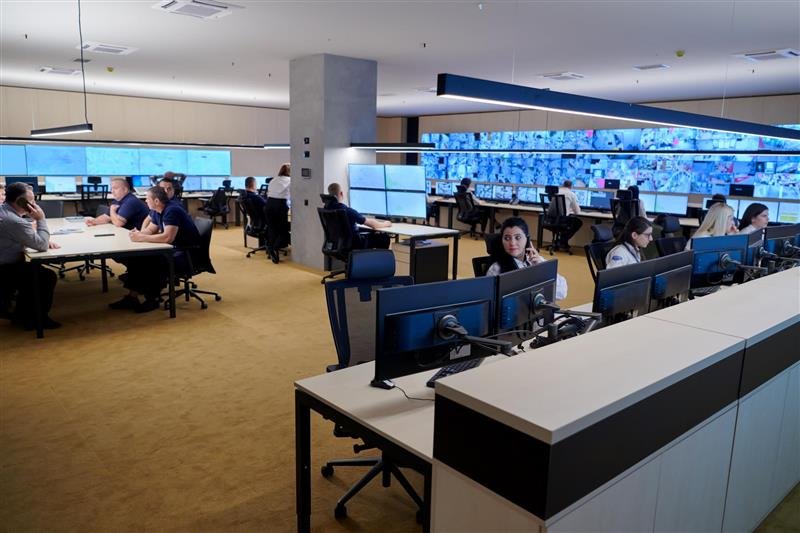
Detection-focused roles operate in environments where continuous monitoring is essential. Security Operations Center analysts, monitoring analysts, and threat hunters review alerts, analyze logs, and investigate unusual behavior across systems and networks. Their work requires patience and analytical thinking, as most alerts turn out to be harmless, but identifying the few that indicate real threats is critical. Effective detection reduces incident impact by shortening the time between compromise and response.
Roles aligned with the respond stage
When incidents occur, specialized teams take over to contain and investigate the problem. Incident responders and digital forensics specialists analyze attack behavior, isolate affected systems, and coordinate actions required to stop further damage. These roles often operate under time pressure and require strong communication skills, since technical decisions must be explained clearly to management and operational teams during active incidents.
Roles aligned with the recover stage
Recovery involves restoring systems safely and ensuring improvements are made after incidents within the broader secure data lifecycle. IT operations teams, security managers, and security operations leaders work together to bring services back online, validate system integrity, and review what changes are necessary to prevent recurrence. This stage connects operational stability with long-term security improvement, ensuring that incidents lead to stronger processes rather than repeated failures.
Understanding roles through the lifecycle helps beginners make better career decisions because it shifts focus away from job titles and toward responsibilities. Some roles emphasize planning and risk evaluation, others focus on building defenses, while some require rapid decision-making during incidents. The lifecycle makes it easier to see where personal interests and strengths align within the broader cybersecurity ecosystem.
How Security Incidents Progress Across Lifecycle Stages
The lifecycle becomes easier to understand when viewed through real incidents rather than theory. In practice, security events rarely fail at just one stage. Most incidents succeed because of small gaps across multiple stages, such as incomplete visibility, weak verification processes, delayed detection, or slow response. What matters is not whether an organization faces an incident, but how effectively it moves through identification, protection, detection, response, and recovery once something goes wrong.
Real-world cases show that security is rarely about sophisticated attacks alone. Many incidents begin with ordinary actions such as trusting a familiar email, approving a routine request, or overlooking small inconsistencies. The lifecycle explains how organizations recognize these failures, contain damage, and strengthen defenses afterward.
Invoice fraud involving Google and Facebook
Between 2013 and 2015, employees at Google and Facebook processed invoices appeared to come from a legitimate technology vendor. The requests matched normal business communication patterns, which allowed payments to move forward without immediate suspicion. The attacker exploited trust and familiarity rather than technical vulnerabilities, demonstrating how risks can exist even in highly mature environments.
From a lifecycle perspective, identification and protection stages initially failed to recognize weaknesses in vendor verification and approval workflows. Detection occurred only after irregular payment patterns triggered deeper reviews, which led to investigation and response. Authorities were involved, fraudulent transfers were traced, and funds were eventually recovered. Afterward, both organizations strengthened verification processes and approval controls, feeding lessons learned back into earlier lifecycle stages and reducing the likelihood of similar fraud in the future.
Phishing attack affecting Experi-Metal and Comerica Bank
In another widely discussed case, an employee at Experi-Metal received an email that appeared to come from their bank, requesting urgent account confirmation. Believing the request to be legitimate, the employee entered credentials into a fraudulent website controlled by attackers. Unauthorized wire transfers began soon afterward.
Although systems and accounts were properly established, the attack bypassed technical safeguards by exploiting human trust. Detection occurred when unusual transaction behavior triggered monitoring alerts, prompting investigation, and rapid response. Accounts were frozen before further losses occurred, and the incident later influenced improvements in authentication controls, monitoring practices, and user awareness training.
These examples illustrate an important reality for beginners. Security incidents rarely represent a single failure. They move through multiple stages of the lifecycle, and improvements made during recovery often become the strongest defenses against future attacks. Understanding incidents through this lens helps learners move beyond the idea of blaming individuals or tools and instead focus on how processes evolve to reduce risk over time.
What Are Common Beginner Misconceptions About the Information Security Lifecycle?
When people first start learning cybersecurity, their understanding is often shaped by headlines, movies, or online discussions that focus on dramatic attacks rather than everyday security work. These impressions are understandable, but they create unrealistic expectations about how security actually operates inside organizations. Clearing up these misconceptions early helps beginners approach the field with a more practical mindset and prevents wasted effort on the wrong priorities.
Security means stopping every attack
One of the most common misunderstandings is the belief that strong security means preventing all incidents. In reality, no organization operates in a perfectly secure environment. New vulnerabilities appear constantly, software changes introduce new risks, and human mistakes cannot be eliminated entirely. The purpose of the lifecycle is not to guarantee zero incidents but to reduce risk, detect problems early, and limit damage when something does occur. Organizations that recover quickly and improve continuously are considered mature from a security perspective, even if incidents still happen.
Cybersecurity is mainly ethical hacking
Another common assumption is that cybersecurity revolves around offensive activities such as penetration testing or ethical hacking. While offensive security plays an important role, it represents only a small portion of daily security operations. Most professionals spend their time managing access, monitoring systems, conducting risk assessment and management, responding to alerts, and improving processes. The lifecycle makes this clear by showing that prevention, monitoring, and recovery activities occupy far more time than attempting to break into systems.
Tools matter more than process
Beginners often focus heavily on learning specific tools, assuming that technical proficiency alone defines success. In practice, tools change frequently as technologies evolve, while security processes remain relatively stable. Organizations value professionals who understand why a control exists, when it should be applied, and how to respond when something fails. The lifecycle emphasizes method over software, helping learners understand that tools support decisions rather than replace them.
Correcting these misconceptions helps beginners build realistic expectations about cybersecurity work. Instead of chasing trends or shortcuts, they begin to see security as a structured discipline built around awareness, coordination, and continuous improvement.
This structured security framework makes one thing clear: protection is not a one-time activity that ends after tools are installed or policies are written. Organizations operate in environments where technology changes constantly, new risks appear without warning, and human error remains unavoidable. This cycle-based approach provides a practical way to manage that reality by turning security into an ongoing process of understanding risk, strengthening protection, detecting issues early, responding effectively, and continuously improving after every incident.
For beginners, this understanding removes much of the confusion around cybersecurity. Real security work is not built around isolated tools or occasional defensive actions. It is built around structured processes, coordination between teams, and consistent improvement over time. Learning the lifecycle helps individuals see how security functions in real environments and why prevention, detection, response, and recovery must work together rather than independently.
For learners who want to move beyond theory and understand how these concepts are applied in practice, structured training becomes important. The Cybersecurity Course from Win In Life Academy is designed to help beginners build practical knowledge around risk identification, system protection, monitoring, incident response, and modern security practices used across real organizations. The program focuses on helping learners understand how security processes operate in real-world environments rather than limiting learning to tools alone.
Frequently Asked Questions – FAQs
1. Is the Information Security Lifecycle the same as the NIST Cybersecurity Framework?
No. This describes the continuous process organizations follow to manage security activities, while frameworks like the NIST Cybersecurity Framework provide structured guidelines and controls that organizations can use within that lifecycle. Many organizations use frameworks to support lifecycle stages, but the concepts are not identical. The NIST cybersecurity lifecycle model is one of the most widely referenced frameworks organizations use to structure their security activities.
2. How frequently should organizations evaluate their security management processes?
There is no fixed timeline because risk levels vary between organizations. However, most organizations review security processes periodically, after major system changes, or following security incidents to ensure controls and monitoring remain effective.
3. Can small businesses benefit from using a security lifecycle approach?
Yes. Smaller organizations often assume lifecycle-based security is only for large enterprises, but the approach is even more important for smaller teams with limited resources. A structured process helps prioritize risks and avoid spending effort on low-impact security activities.
4. What is the difference between information security and cybersecurity in this context?
Cybersecurity mainly focuses on protecting digital systems and networks from attacks, while information security covers protection of information in all forms, including digital data, physical records, and internal communication processes. The lifecycle applies to both but is broader than cybersecurity alone.
5. Which stage of the lifecycle is usually the weakest in organizations?
Detection and identification are commonly weaker than protection. Many organizations invest heavily in preventive tools but lack visibility into assets or effective monitoring, which delays discovery of incidents and increases overall impact.
6. Does automation replace human involvement in the security lifecycle?
No. Automation helps with monitoring, alert generation, and response speed, but human judgment is still required to interpret context, make decisions, and manage incident coordination. Security remains a human-driven process supported by technology.
7. How does cloud computing affect the security lifecycle?
Cloud environments change how assets are identified and protected because infrastructure can scale quickly and change frequently. Organizations must adapt lifecycle practices to maintain visibility, manage access correctly, and monitor distributed environments effectively.
8. What skills should beginners focus on to understand lifecycle-based security better?
Beginners benefit from learning risk awareness, basic networking concepts, access control principles, log analysis, and incident handling fundamentals. These skills connect directly to multiple lifecycle stages and provide a stronger foundation than tool-specific knowledge alone.
9. How is incident response different from recovery in the lifecycle?
Incident response focuses on stopping and containing the threat, while recovery focuses on restoring systems safely and ensuring similar incidents are less likely to happen again within the broader data security lifecycle. Response handles the immediate problem, whereas recovery addresses long-term stability.
10. Why do organizations still experience breaches even when they follow security lifecycles?
Following a lifecycle reduces risk but does not eliminate it. Attack methods evolve, new vulnerabilities appear, and human error remains unavoidable. Organizations that follow lifecycle principles experience fewer severe incidents because they detect issues earlier and recover faster.