Search “AI vs Machine Learning vs Data Science” and most articles repeat the same three lines: AI is intelligent systems, ML is a subset of AI, Data Science is about insights. Read five of them and the boundaries still feel blurry. That confusion is not accidental. These fields overlap heavily at the foundation, share most of the same tools at the entry level, and use the same job titles interchangeably depending on which company is hiring.
Here is what most blogs avoid saying clearly: at the beginner level, the practical differences between AI and Machine Learning and Data Science are smaller than the marketing makes them seem. A junior Data Scientist, a junior ML Engineer, and a junior AI Developer often spend their first year writing similar Python code, cleaning similar datasets, and solving similar problems. The real divergence happens 3 to 5 years in, when specialization actually starts to matter. Choosing the right AI ML career at the start means understanding where these fields eventually split, not pretending they are three separate highways from day one.
This blog compares Artificial Intelligence, Machine Learning, and Data Science across the dimensions that actually affect a career: skills, day-to-day work, salary potential, and industry demand. By the end, a four-question decision framework will narrow down which path fits, based on concrete preferences rather than vague interests. If you are completely new to these fields, our AI and ML for beginners guide is a useful primer to read alongside this comparison.
What Is Artificial Intelligence?
Artificial Intelligence refers to computer systems designed to perform tasks that traditionally required human intelligence, such as understanding language, recognizing images, making decisions, and learning from experience. It is the broadest of the three fields, acting as an umbrella that contains Machine Learning, Natural Language Processing, computer vision, and generative AI systems like ChatGPT.
What Is Machine Learning?
Machine Learning is a subset of AI that lets systems learn patterns from data instead of following manually programmed rules. It powers Netflix recommendations, spam filters, credit scoring models, and predictive text, and it gets more accurate as the volume of data it learns from grows. If you want to understand how ML differs from its most talked-about subfield, our machine learning vs deep learning guide breaks it down clearly.
What Is Data Science?
Data Science is the discipline of extracting meaning from data to guide business decisions, blending statistics, programming, and storytelling to turn raw information into actionable insights. Unlike AI and ML, which build intelligent systems, Data Science is primarily focused on answering questions and solving business problems using data.
How AI and Machine Learning and Data Science Actually Relate
These three fields are not equals sitting side by side. They are nested. Artificial Intelligence is the broadest field, and Machine Learning is one of the primary methods used to achieve it. Data Science sits differently: it is not a subset of AI, but it draws heavily from both AI and ML techniques to do its work.
Think of AI as the destination, Machine Learning as one of the main roads that gets there, and Data Science as a parallel discipline that frequently shares the same road without always heading to the same place. In practice, this means the tools overlap, the skills overlap, and at the entry level, the job descriptions often overlap too, which is exactly why choosing between them feels confusing.
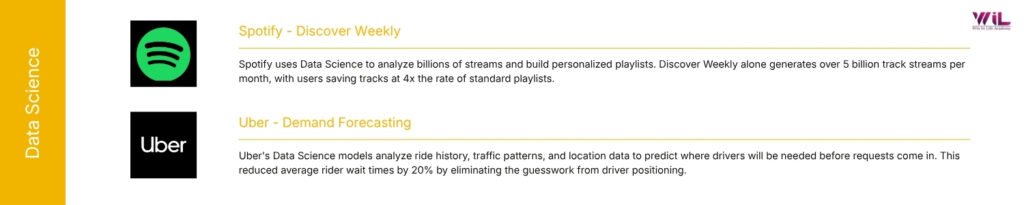
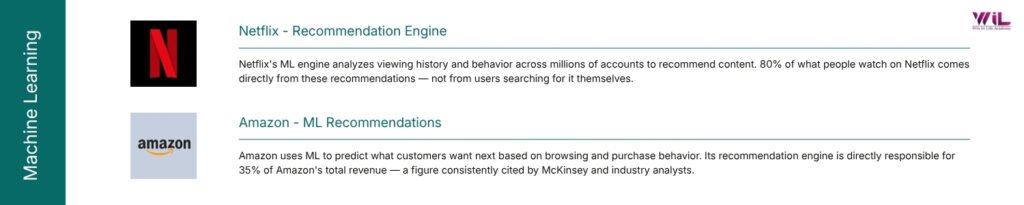
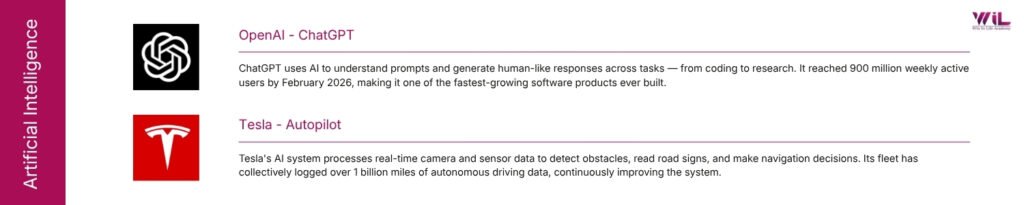
Real-World Examples of AI, Machine Learning, and Data Science
Key Differences Between AI, Machine Learning, and Data Science
Hard Facts
| Artificial Intelligence | Machine Learning | Data Science | |
| Entry-level salary in India | ₹6 to ₹10 LPA | ₹6 to ₹8 LPA | ₹4 to ₹8 LPA |
| Time to first job | 12 to 18 months; harder to break in without a strong ML or programming foundation first | 9 to 14 months; requires solid math and coding before building real models | 6 to 10 months; most accessible entry point, foundational stats and Python are enough to land a junior role |
| Mathematics requirement | Deep: linear algebra, calculus, probability, neural network theory, and optimization | Heavy: linear algebra, calculus, probability, and statistics form the backbone of model training | Moderate: statistics and probability are core; calculus and linear algebra are helpful but not daily requirements |
| Programming depth required | High: building systems and integrating AI models into production environments | High: writing, training, tuning, and deploying models demands strong coding fundamentals | Medium: Python and SQL are essential; focus is on analysis and visualization rather than engineering |
If you are worried about the math, our breakdown of the maths needed for data science shows exactly what to focus on first.
Day-to-Day Reality
| Artificial Intelligence | Machine Learning | Data Science | |
| What you actually do at your desk | Designing intelligent systems, building AI-powered applications, integrating LLMs and APIs, prompt engineering, automating complex workflows | Writing and training ML models, running experiments, tuning hyperparameters, evaluating model performance, building data pipelines | Cleaning and analyzing datasets, building dashboards, running statistical tests, creating forecasts, writing reports for business teams |
| Who you work with | Product managers, software engineers, AI researchers, and MLOps teams, mostly technical stakeholders | Data engineers, ML researchers, software developers, and DevOps teams, almost entirely technical | Business analysts, marketing teams, operations managers, and senior leadership, frequent interaction with non-technical stakeholders |
| What your output looks like | A working intelligent system or application, something that reasons, responds, or acts autonomously | A trained, evaluated, and deployed predictive model that a product or system uses automatically | A report, dashboard, forecast, or data-driven recommendation that a business team reads and acts on |
Personality and Fit
| Artificial Intelligence | Machine Learning | Data Science | |
| What kind of thinking it rewards | Systems thinking: seeing how components connect, anticipating failure points, architecting solutions that scale | Experimental thinking: forming hypotheses, testing rigorously, iterating fast, learning from what fails | Analytical thinking: asking sharp questions about data, finding patterns others miss, translating numbers into decisions |
| Tolerance for ambiguity | Very high: fast-moving frontier where tools, frameworks, and best practices shift constantly | High: model experimentation is inherently uncertain; most experiments fail before one works | Medium: business problems are messy, but the analytical process itself is structured and methodical |
| Building vs analyzing | Strongly oriented toward building: creating systems and products | Strongly oriented toward building: engineering models and pipelines | Strongly oriented toward analyzing: interpreting data and generating insights |
Career Trajectory
| Artificial Intelligence | Machine Learning | Data Science | |
| Where the first job leads | AI Engineer to Senior AI Engineer to AI Architect or Generative AI Specialist within 3 to 5 years | ML Engineer to Senior ML Engineer to ML Lead or MLOps Specialist within 3 to 5 years | Data Analyst to Data Scientist to Senior Data Scientist or Analytics Manager within 3 to 5 years |
| Ceiling potential | Very high: Generative AI, AI agents, and intelligent automation are among the most valued specializations in tech right now | Very high: senior ML engineers at product companies command some of the strongest compensation packages in engineering | High: senior data scientists and analytics managers earn strong salaries with a clear path into strategy and leadership |
| How easy is it to switch later | Moderate: strong overlap with ML; switching to ML is natural, but moving to Data Science requires a mindset shift from building to analyzing | Easy: ML skills transfer directly into AI roles upward and Data Science roles sideways; the most flexible starting point technically | Moderate: Data Science gives a strong analytical foundation; moving into ML requires deepening math and engineering skills significantly |
Which Field Is Actually Right for You?
Artificial Intelligence is the right path if you want to build things that think. The work is technical and ambitious: designing intelligent systems, integrating large language models, automating complex decisions. It has the highest entry bar of the three. You need strong programming, a solid ML foundation, and comfort operating in a space where the tools and best practices change every few months.
The payoff is real, as AI engineers and generative AI specialists are among the most in-demand and highest-paid roles in tech right now. But expect 12 to 18 months of focused learning before your first job, and do not skip the fundamentals to get there faster. If this path appeals to you, review the AI engineer skills required to know exactly what to build toward.
Machine Learning sits at the technical core of all three fields and is the most flexible starting point if you are mathematically inclined. The daily work is experimental. You form hypotheses about models, test them, fail, iterate, and eventually deploy something that works in production.
It demands the heaviest mathematics of the three, where linear algebra, calculus, statistics, and probability are not optional. The career path is clear and well-compensated, and ML skills travel well, both upward into AI roles and sideways into Data Science. If you enjoy the engineering side of data and want maximum career optionality, ML is the strongest foundation to build on.
Data Science is the most accessible entry point and the right choice if your instinct is to analyze rather than build. The work is closer to the business: cleaning data, building dashboards, generating forecasts, and translating numbers into decisions that non-technical teams can act on.
The math bar is lower than ML, the time to first job is the shortest of the three at 6 to 10 months, and the daily work involves more cross-functional collaboration than either AI or ML. It is not the easier field. It is the different field. The ceiling is high, the demand is consistent, and for students who are not yet sure how deep they want to go technically, it is the smartest place to start. Our guide on how to become a data scientist in 2026 maps out the full path.
PG Diploma in Data Science and AI ML
Master Data Science, Machine Learning, Deep Learning, and AI — from Python fundamentals to real-world model deployment.
Skills You Will Build
Tools Covered
Salaries and Career Progression
| Experience Level | Artificial Intelligence | Machine Learning | Data Science |
| Entry-level (0 to 2 years) | ₹6 to ₹10 LPA | ₹6 to ₹8 LPA | ₹4 to ₹8 LPA |
| Mid-level (3 to 5 years) | ₹18 to ₹25 LPA | ₹12 to ₹20 LPA | ₹10 to ₹18 LPA |
| Senior-level (6+ years) | ₹30 to ₹50 LPA+ | ₹25 to ₹35 LPA+ | ₹20 to ₹30 LPA+ |
| Typical first role | AI Engineer / Prompt Engineer | Junior ML Engineer / Data Scientist | Data Analyst / Junior Data Scientist |
| 3 to 5 year progression | Senior AI Engineer / Generative AI Specialist | ML Lead / MLOps Engineer | Data Scientist / Analytics Manager |
| Senior specializations | AI Architect / AI Product Lead / LLM Engineer | Principal ML Engineer / ML Research Scientist | Senior Data Scientist / Head of Analytics |
The demand behind these numbers is real and documented. According to a NASSCOM and Deloitte report, AI talent demand in India is projected to grow from around 600,000 to 650,000 in 2022 to over 1.25 million by 2027, driven by 25 to 35 percent annual growth in the AI software and services market. Globally, the U.S. Bureau of Labor Statistics projects data scientist employment to grow 34 percent from 2024 to 2034, more than ten times the average rate across all occupations.
Salary Insight for Data Science Freshers
One note: Bengaluru, Hyderabad, and Mumbai consistently pay 15% to 20% above these ranges. Remote roles at product-first companies and MNCs can push even further above.
These figures reflect the broad India market, not top-of-market outliers. For a closer look at where freshers are getting hired, explore our list of the top data science companies in India hiring freshers.
Explore MorePG Diploma in Data Science and AI ML
The 6-month advanced program that takes you from zero to job-ready — with placement support built in.
6
Months including placement support
25+
Industry tools covered
Every
15th & 30th new batch starts
Global
Certification on completion
Job Roles You Become Eligible For
How to Choose the Right Domain: A Decision Framework
- Which of these sounds most like you?
- I want to build products and systems people interact with → AI
- I want to engineer the models that power those products → ML
- I want to answer business questions using data → Data Science
- How comfortable are you with heavy mathematics right now?
- Not at all yet, I need to build up → Start with Data Science
- Somewhat — I understand the basics → ML is accessible with effort
- I actively enjoy it → All three are open, lean toward ML or AI
- What does your ideal workday look like?
- Writing code, building pipelines, deploying models → ML or AI
- Analyzing data, building dashboards, presenting insights → Data Science
- Designing systems, working with LLMs, automating workflows → AI
- How soon do you need to be employed?
- Within 6–10 months → Data Science
- Within 9–14 months → ML
- I can invest 12–18 months → AI or ML
For a wider view of where each path can lead, explore our overview of career options in AI and ML.
How to Become Job-Ready in AI, ML, and Data Science
Step 1: Build on fundamentals before tools.
Start with Python, statistics, and clear data thinking before touching TensorFlow or Power BI. Everything else stacks on top of this, and if you skip it, the whole structure is shaky.
Step 2: Take a structured program.
Self-study gets you started but rarely gets you hired. A structured program with industry tools, real projects, and mentorship compresses the learning curve significantly and gives you a credible credential to show employers.
Step 3: Build a project portfolio.
While learning, build two or three end-to-end projects using real data and real problems. Document them clearly on GitHub. This is what hiring managers actually look at, not your certificate and not your grades. Need ideas? Start with our lists of top AI projects for beginners and machine learning projects for beginners.
Step 4: Get certified.
Once your projects are in place, a globally recognized certification validates what you already know. It carries weight because there is substance behind it, not the other way around.
Step 5: Apply before you feel ready.
Start applying for internships and junior roles before you think you are fully qualified. Rejection is data. It tells you exactly what is missing so you can close that specific gap instead of preparing indefinitely.
Start Your AI ML Career With Win In Life Academy
The gap between knowing which field to enter and actually getting hired comes down to the quality of your training and the support system around it. According to NASSCOM, AI-related job demand in India will cross 1 million by 2026, but only around 16 percent of IT professionals are currently AI-skilled. That gap is where opportunity lives for students who invest in the right foundation now.
Win In Life Academy’s PG Diploma in Data Science and AI ML is built for exactly this moment. It covers the full spectrum from Python and statistics through Machine Learning, Deep Learning, and AI model deployment, with 20+ industry tools and dedicated placement support built into the program structure. Batches start every 15th and 30th. If you still have questions about which path fits you, the advisors at Win in Life Academy are the right next step.
PG Diploma in Data Science and AI ML
6 months of advanced training followed by 2 months of dedicated placement support — built to get you hired, not just certified.
Placement mentorship
Dedicated support to connect you with hiring partners across India’s top tech companies.
1:1 personalised mentorship
Direct guidance from industry practitioners — not just recorded sessions.
Mock interviews
Technical and behavioural interview practice with real feedback before actual hiring panels.
Global certification
Globally recognised certification on completion — validated by industry and academia.
20+ industry tools
TensorFlow, Power BI, MLflow, Docker, AWS, Tableau, and more — tools used in actual roles.
Corporate etiquette sessions
Workplace communication, professional conduct, and soft skills training alongside technical learning.
Frequently Asked Questions
1. What is the difference between AI, Machine Learning, and Data Science?
Artificial Intelligence is the broadest field, focused on building systems that simulate human intelligence. Machine Learning is a subset of AI that enables systems to learn patterns from data without being explicitly programmed.
Data Science is a separate but overlapping discipline focused on extracting insights and answers from data to support business decisions. AI and ML build intelligent systems, while Data Science produces actionable insights.
2. Which is better for beginners: AI, Machine Learning, or Data Science?
Data Science is the most beginner-friendly starting point among the three. It requires moderate mathematics, focuses on Python and SQL over complex engineering, and has the shortest path to a first job at 6 to 10 months of focused learning. Beginners who start with Data Science build a strong analytical foundation that makes transitioning into ML or AI significantly easier later.
3. Which field has the highest salary: AI, ML, or Data Science?
AI and Machine Learning roles generally offer higher salary ceilings than Data Science, particularly at the mid and senior levels. In India, senior AI and ML engineers can earn ₹30 to 50 LPA and above, compared to ₹20 to 30 LPA for senior Data Scientists. At the entry level, however, all three fields offer comparable starting salaries between ₹4 and 10 LPA depending on skills, location, and employer.
4. Is Machine Learning a part of Artificial Intelligence?
Yes. Machine Learning is a subset of Artificial Intelligence. AI is the broader field focused on building intelligent systems, and Machine Learning is one of the primary methods used to achieve that, enabling systems to learn from data rather than following manually programmed rules. Most modern AI applications, including recommendation engines and generative AI systems, are powered by Machine Learning at their core.
5. Can a non-IT or non-engineering student learn Data Science or AI?
Yes. Students from non-technical backgrounds can learn Data Science, Machine Learning, and AI with the right foundational training. The essential starting point is building proficiency in Python programming and basic statistics, neither of which requires a prior engineering degree.
Many working professionals from fields like finance, healthcare, and marketing have successfully transitioned into Data Science roles through structured programs and consistent practice.
6. How long does it take to get a job in Data Science or AI after learning from scratch?
The timeline varies by field. Data Science is the fastest entry point, with focused learners landing their first role in 6 to 10 months. Machine Learning typically requires 9 to 14 months of preparation before a first job becomes realistic.
AI roles generally take 12 to 18 months of dedicated learning, particularly because they require a strong ML and programming foundation first. These timelines assume consistent daily learning, project work, and active job applications.
7. What programming language is most important for AI, ML, and Data Science?
Python is the most important programming language across all three fields. It is the industry standard for data analysis, machine learning model development, and AI application building due to its simplicity and extensive ecosystem of libraries including NumPy, Pandas, Scikit-learn, TensorFlow, and PyTorch. SQL is also essential specifically for Data Science roles that involve working with databases and business data systems.
8. Is Data Science still in demand in 2026?
Yes. Data Science remains one of the fastest-growing career fields globally. The U.S. Bureau of Labor Statistics projects data scientist employment to grow 34 percent between 2024 and 2034, making it the fourth fastest-growing occupation in the economy. In India, the NASSCOM and Deloitte report projects AI and Data Science talent demand to exceed 1.25 million professionals by 2027, against a current supply that falls significantly short of that figure.
9. What is the difference between a Data Scientist and a Machine Learning Engineer?
A Data Scientist focuses on analyzing data, identifying patterns, generating insights, and communicating findings to business stakeholders. A Machine Learning Engineer focuses on building, training, deploying, and maintaining ML models in production systems.
Data Scientists work closer to the business side, while ML Engineers work closer to the engineering and infrastructure side. In practice, the roles overlap at many companies, particularly at smaller organizations and startups.
10. Which field is best for the future: AI, ML, or Data Science?
All three fields have strong long-term demand, but Artificial Intelligence, particularly Generative AI, AI agents, and intelligent automation, represents the highest-growth frontier in technology right now. McKinsey estimates generative AI could generate 2.6 to 4.4 trillion dollars in annual economic value across enterprise use cases.
That said, Data Science and Machine Learning underpin every AI system built, which means demand for all three will grow together rather than one replacing another.