
Business Analyst projects in 2026 focus on solving real business problems using data, KPIs, and decision-making frameworks. Projects like churn analysis, supply chain optimization, and product analytics help build practical skills that recruiters value for entry-level roles.
Most beginners get this wrong.
They think Business Analysts are hired for dashboards, tools, or certifications. That’s not what companies are looking for anymore. In 2026, hiring teams care about one thing: can you understand a business problem and help solve it using data?
That’s where the right business analyst projects for beginners make the difference. Not random exercises, but real-world business analyst portfolio projects that reflect how companies actually operate. The right projects force you to think in terms of revenue, cost, efficiency, and customer behavior, not just charts.
This blog cuts out the noise and focuses on five high-impact Business Analyst projects that actually help you get noticed. Each one is tied to real hiring expectations and built to develop decision-making skills, not just reporting ability.
What Recruiters Look for in Business Analysts in 2026
Let’s clear the illusion first.
Recruiters are not hiring you because you know Excel, SQL, or Power BI. That’s baseline. Everyone applying has that. What they’re really evaluating is whether you can think like someone who helps a business make decisions.
Here’s what actually matters:
1. Ability to Break Down a Business Problem
Most candidates jump straight into data. That’s the mistake.
Recruiters want to see if you can take something vague like “sales are declining” or “customers are leaving” and structure it into a clear, analyzable problem. What exactly is declining? Where? Since when? Under what conditions?
If you can’t define the problem properly, your entire analysis becomes guesswork.
2. Choosing the Right KPIs (Not More KPIs)
Beginners love listing metrics. It looks impressive. It’s not.
What stands out is picking the few metrics that actually matter. For example, in a churn project, showing 15 metrics is noise. Identifying churn rate, tenure, and revenue at risk is signal.
Recruiters are judging your ability to prioritize, not calculate everything available.
3. Translating Analysis into Decisions
This is where most portfolios fall apart.
Candidates show insights like “Region A has lower sales” or “Segment B has higher churn” and stop there. That’s reporting, not analysis.
What recruiters expect is the next step:
So what should the business do about it?
Should pricing change? Should marketing shift focus? Should a process be fixed?
If your project doesn’t answer that, it’s incomplete.
4. Understanding Business Context
Data without context is misleading.
A drop in sales could mean poor marketing, seasonal trends, supply issues, or even external factors. If you don’t consider the business environment, your conclusions will be shallow or wrong.
Strong candidates show they understand how the business operates, not just what the numbers say.
5. Clear Thinking and Communication
You don’t need complex models to get hired. You need clarity.
Recruiters prefer someone who can explain:
- what the problem is
- what was analyzed
- what was found
- what should be done
…in a simple, structured way.
If your explanation is confusing, your analysis might as well not exist. This is exactly why strong entry-level business analyst projects focus on decision-making, not just reporting.
5 Business Analyst Projects to Get You Hired in 2026
These aren’t random business analytics project ideas. Each one reflects real-world business analyst projects companies deal with daily. If you can execute even 3–4 of these properly, you’re already ahead of most candidates trying to build a business analyst portfolio.
1. Customer Churn & Retention Analytics
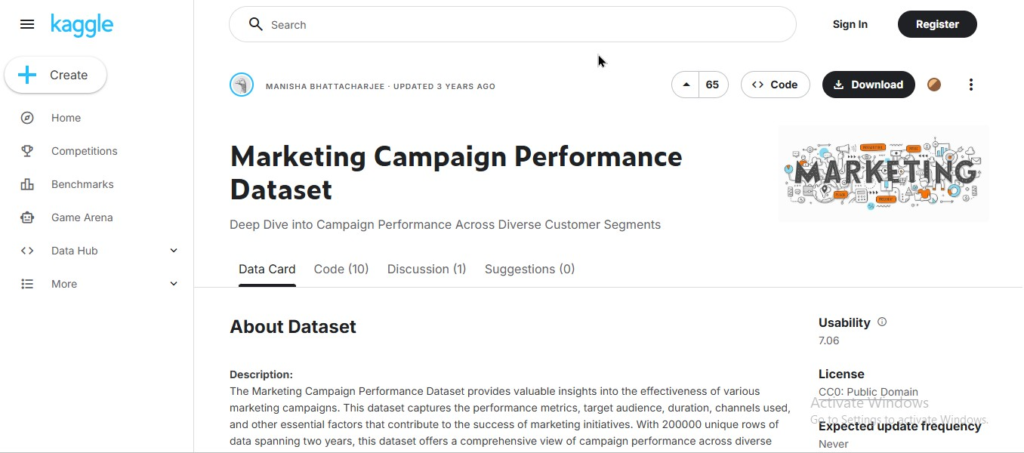
Customer churn analysis focuses on understanding why customers stop using a product or service and how to prevent that loss. In this project, you work with telecom or subscription-based data covering demographics, contracts, usage patterns, billing, and tenure. The core problem is clear: which customers are likely to leave, and what is the financial impact?
You analyze metrics like churn rate, retention rate, customer lifetime value, and revenue at risk. By segmenting customers based on contract type, pricing, and engagement, you identify patterns that signal churn. For instance, short-term users with high charges and low usage often show higher exit rates.
The real value comes from turning these patterns into decisions. Your analysis should lead to actions such as refining pricing, improving onboarding, or targeting high-risk users with retention offers. The outcome is not just insight, but a clear, data-backed retention strategy with measurable impact. This is the kind of work recruiters expect when evaluating real-world business analyst projects with datasets.
One thing to watch out for: don’t stop at identifying trends. Push into recommendations, even if assumptions are involved. That’s what separates a report from real business analysis.
Dataset:
You can use a telecom churn dataset from Kaggle:
https://www.kaggle.com/datasets/sidramazam/customer-churn-analysis-dataset
2. Supply Chain & Inventory Optimization
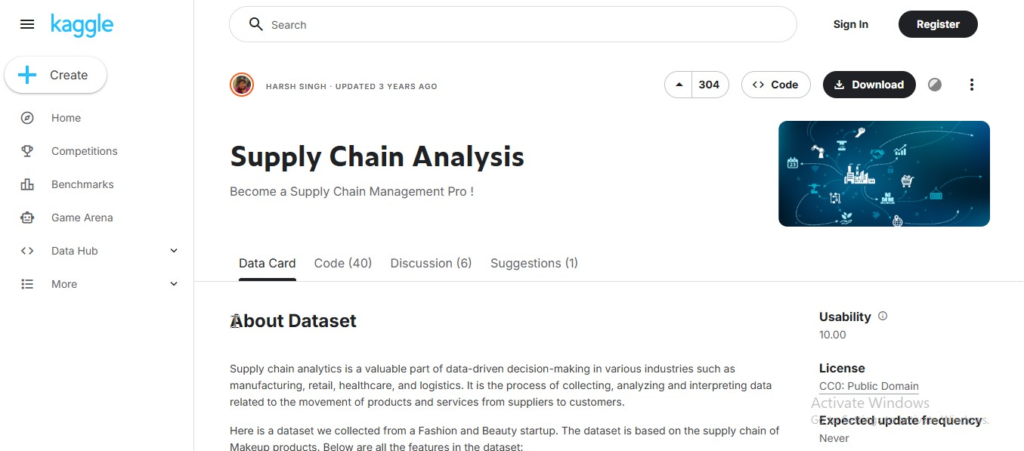
Supply chain analysis focuses on how products move from suppliers to customers and where inefficiencies exist. In this project, you work with data on inventory levels, demand patterns, supplier performance, lead times, and logistics costs. The problem you’re solving is straightforward: how to reduce cost while ensuring products are always available when needed.
You analyze metrics like stock levels, order volume, lead time, stockouts, and logistics costs to identify mismatches between demand and supply. Patterns often emerge around overstocking, delayed replenishment, or unreliable suppliers that directly impact revenue and customer satisfaction.
Your analysis should lead to decisions such as optimizing reorder points, improving supplier selection, or reducing excess inventory. The outcome is a more efficient supply chain that balances cost with availability.
One thing to watch out for: don’t treat this as a reporting exercise. Focus on identifying trade-offs between cost and service levels, because that’s what businesses actually care about.
Dataset:
You can explore supply chain datasets on Kaggle:
https://www.kaggle.com/datasets/harshsingh2209/supply-chain-analysis
3. Marketing Funnel & ROI Attribution Analysis
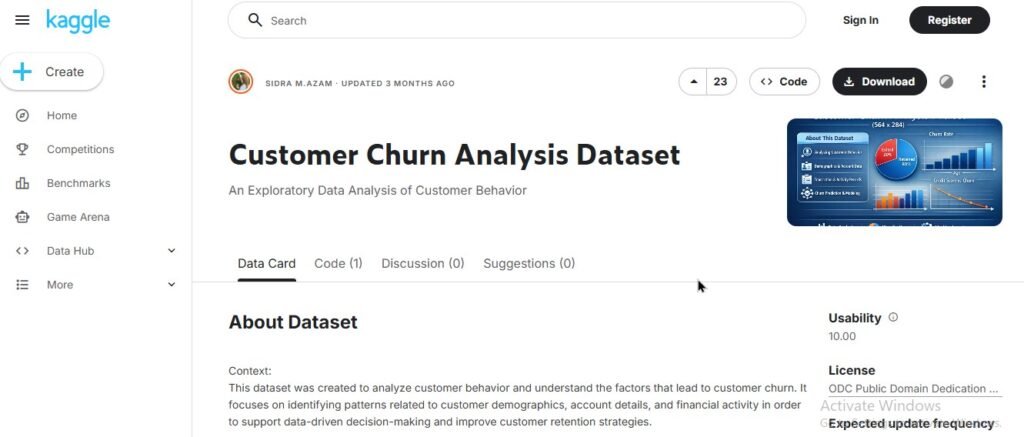
This project focuses on understanding how marketing efforts translate into actual revenue. You work with campaign data that includes impressions, clicks, conversions, spend, and revenue across multiple channels. The core problem is: which marketing activities are actually driving results, and where is money being wasted?
You analyze metrics like conversion rate, cost per acquisition, customer acquisition cost (CAC), and return on investment (ROI). Funnel analysis helps you identify where users drop off, while channel comparisons reveal which platforms deliver real value.
The goal is to move beyond surface-level metrics and connect marketing performance to revenue outcomes. Your analysis should guide decisions like reallocating budgets, improving targeting, or fixing weak funnel stages.
One thing to watch out for: high clicks don’t mean success. Focus on conversion and profitability, not vanity metrics.
Dataset:
Use marketing campaign datasets from Kaggle:
https://www.kaggle.com/datasets/manishabhatt22/marketing-campaign-performance-dataset
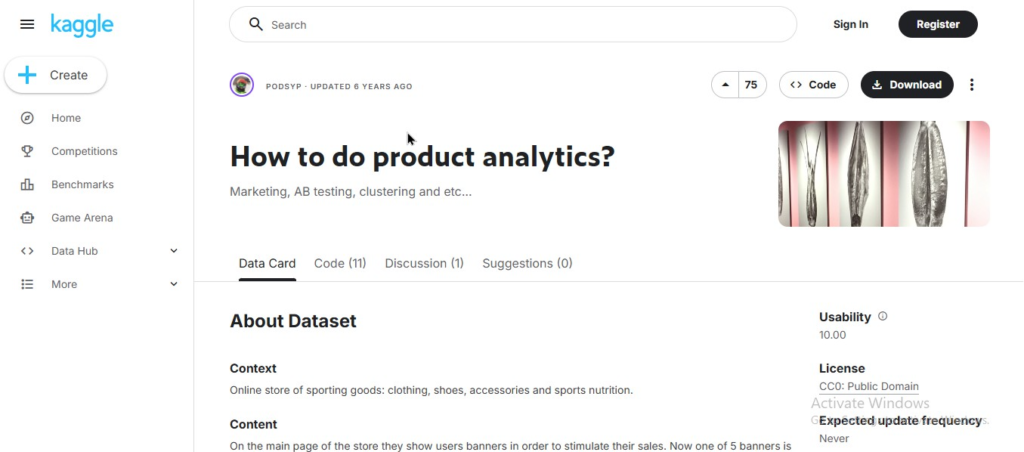
4. Product / App Analytics (User Behavior & Retention)
Product analytics focuses on how users interact with a product and what drives engagement or drop-off. In this project, you work with app or platform data such as user sessions, feature usage, events, and retention timelines. The core problem is: how users behave within the product and why they continue or stop using it.
You analyze user journeys, feature adoption rates, session frequency, and retention cohorts to understand engagement patterns. This helps identify where users lose interest, which features drive value, and what keeps them coming back.
Your analysis should lead to decisions such as improving onboarding flows, enhancing key features, or removing friction points in the user experience. The outcome is a product that retains users better and delivers higher lifetime value.
One thing to watch out for: don’t just track activity. Focus on behavior that drives retention, not surface-level usage.
Dataset:
You can find product analytics datasets on Kaggle:
https://www.kaggle.com/datasets/podsyp/how-to-do-product-analytics
5. Business Process & Operations Optimization
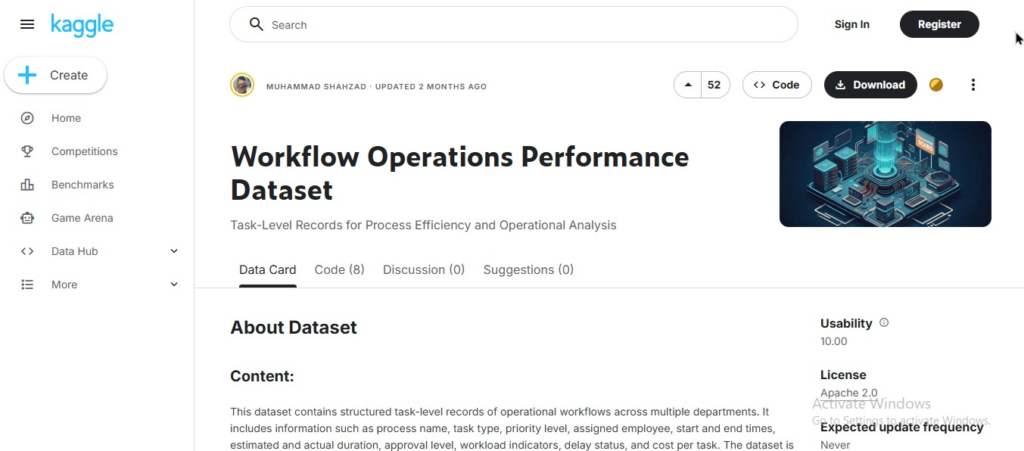
This project focuses on improving internal business processes by identifying inefficiencies and delays. You work with workflow data that includes task timelines, priorities, departments, completion times, and costs. The problem is: where processes are slowing down and how to make them more efficient.
You analyze metrics like task completion time, delay rate, on-time performance, and cost per task to identify bottlenecks. Patterns often reveal overloaded teams, inefficient workflows, or poorly defined processes.
Your analysis should lead to decisions such as redistributing workload, improving process design, or reducing delays. The outcome is faster execution, lower costs, and better operational efficiency.
One thing to watch out for: don’t just highlight delays. Focus on why they happen and what should change.
Dataset:
Explore operations datasets on Kaggle:
https://www.kaggle.com/datasets/algozee/workflow-operations-performance-dataset
| Project | What You Solve | Key Skills Built | Hiring Value |
|---|---|---|---|
| Customer Churn & Retention | Why customers leave and how to reduce churn | KPI analysis, segmentation, retention strategy | High – direct revenue impact across industries |
| Supply Chain & Inventory Optimization | Demand-supply gaps, stock issues, and cost inefficiencies | Operational analysis, inventory planning, trade-offs | High – critical for retail, e-commerce, manufacturing |
| Marketing Funnel & ROI Attribution | Which campaigns actually drive conversions and revenue | Funnel analysis, ROI thinking, performance evaluation | High – strong demand in growth and marketing teams |
| Product / App Analytics | How users behave, engage, and drop off within a product | User journey analysis, cohort analysis, retention thinking | Very High – key for product and SaaS companies |
| Business Process & Operations Optimization | Where workflows break and how to improve efficiency | Process analysis, bottleneck identification, optimization | High – strong alignment with core BA responsibilities |
How to Present These Projects in Your Portfolio
Most candidates put in the effort but still get ignored. The issue isn’t always the project, it’s how they present it. If it reads like a report, it gets treated like one.
Start with the business problem, not the dataset. Opening with “I used a Kaggle dataset” immediately weakens your positioning. Instead, frame the situation the way a business would see it. For example, customer churn impacting revenue or inventory issues increasing cost. This shifts your role from someone analyzing data to someone solving a problem.
Then, briefly explain how you approached the analysis. You don’t need to document every step, but you do need to show intent. Why did you focus on certain KPIs? What were you trying to uncover? This is where recruiters understand how you think, not just what you did.
When it comes to insights, avoid stating the obvious. Saying sales increased or churn is higher in a segment doesn’t add value. Focus on what actually changes decisions. Which segment is driving losses? Where is inefficiency coming from? What pattern needs attention?
This naturally leads to the most important part: recommendations. Every project should clearly answer what the business should do next. Whether it’s adjusting pricing, reallocating budget, or fixing a process, your analysis should point toward action. Without this, the project feels incomplete.
Keep everything structured and easy to follow. A simple flow works best:
- Problem
- Analysis
- Insight
- Recommendation
If someone can quickly understand your work without effort, you’ve done it right. That’s what makes a portfolio stand out.
Conclusion
If you’ve read this far, here’s the truth most people avoid.
Business Analysts are not hired for their expertise in tools. They’re hired for how they understand problems and drive decisions. That’s the standard now, and it’s only getting stricter.
The five projects in this guide aren’t random picks. Each one reflects real business scenarios companies deal with daily, from reducing churn to improving operations and driving growth. If you execute even a few of them properly, with clear thinking and strong recommendations, you’re already ahead of most candidates.
What matters is not how many projects you complete, but how well you connect analysis to action. That’s the gap most people never close.
This is also where most learners struggle. They either follow tutorials or build projects without real direction, which is why their portfolios don’t translate into job opportunities.
At Win in Life Academy, the focus is on closing that exact gap. The Business Analytics Next-Gen AI program is built around real-world problem solving, where you don’t just learn tools but work on structured projects, understand KPIs, and practice making decisions the way businesses expect.
If you’re serious about getting hired, you need more than content. You need guided execution, feedback, and real-world context.
That’s what actually moves the needle.
Frequently Asked Questions (FAQs)
1. What are the best business analyst projects for beginners in 2026?
The best business analyst projects for beginners focus on real business problems like customer churn, supply chain optimization, marketing ROI, product analytics, and operations efficiency. These projects build decision-making skills, which recruiters prioritize over tools.
2. Which business analyst projects help you get a job?
Projects that directly impact revenue, cost, or efficiency stand out. Churn analysis, marketing ROI, and product analytics are strong choices because they show how your analysis can influence real business decisions.
3. How many business analyst portfolio projects are enough?
Three to five strong business analyst portfolio projects are enough if they clearly demonstrate problem-solving, KPI selection, and actionable recommendations. Depth matters more than quantity.
4. What skills do recruiters expect from business analyst projects?
Recruiters expect skills like problem structuring, KPI selection, data interpretation, and decision-making. The ability to translate insights into business actions is more important than technical complexity.
5. Are Kaggle datasets good for business analyst projects?
Yes, Kaggle datasets are useful for beginners, but the value comes from how you use them. Treat the dataset like a real business scenario and focus on insights and recommendations, not just analysis.
6. Do I need SQL and Excel for business analyst projects?
Yes, SQL and Excel are commonly used in business analyst projects for data extraction and analysis. Visualization tools like Power BI or Tableau are also helpful, but tools alone won’t get you hired.
7. What makes a business analyst project stand out to recruiters?
A strong project clearly defines the business problem, focuses on relevant KPIs, delivers meaningful insights, and ends with actionable recommendations. Projects that show decision-making stand out more than dashboards.
8. Can I become a business analyst with only projects and no experience?
Yes, if your projects reflect real-world thinking. Many entry-level candidates get shortlisted when they can clearly explain their analysis, insights, and business recommendations.
9. What should a business analyst portfolio include?
A good portfolio should include 3–5 projects with clear problem statements, structured analysis, key insights, and recommendations. It should show how you approach real business problems using data.
10. How do I choose the right business analyst project ideas?
Choose projects that solve real business problems and involve messy, realistic data. Focus on areas like customer behavior, operations, or revenue analysis where your work can lead to clear business decisions.